


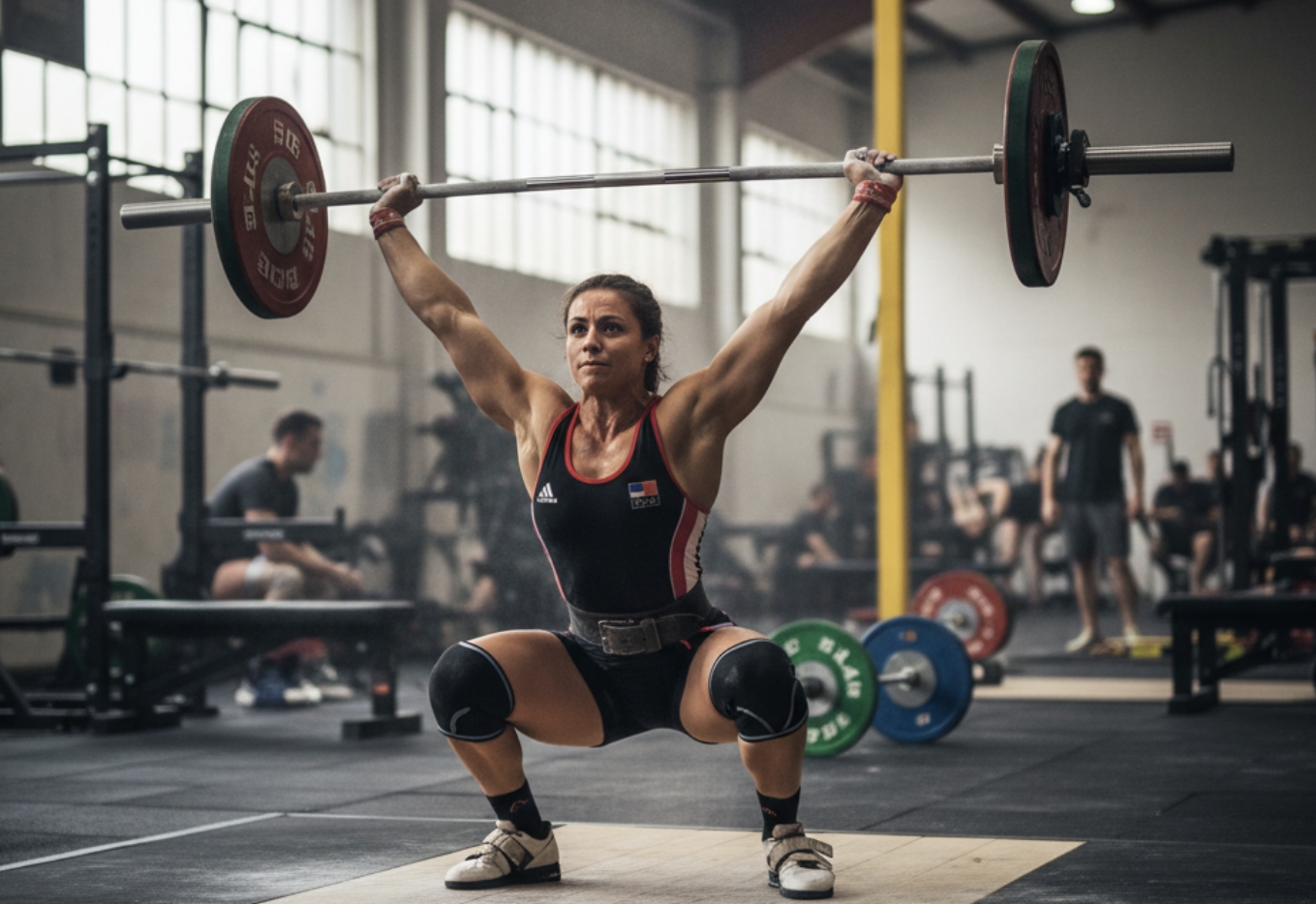
Goede tiltechniek begint bij de stand van je skelet
Goede techniek begint vóór de lift
Veel sporters denken bij techniek vooral aan instructies.
Hou je rug recht.
Span je core aan.
Duw je knieën naar buiten.
Trek je schouderbladen naar achteren.
Blijf stabiel.
Beweeg gecontroleerd.
Dat zijn allemaal nuttige aanwijzingen, maar ze gaan uit van één belangrijke voorwaarde: je lichaam moet de positie kunnen vinden en vasthouden zonder daar onnodig veel spanning voor te gebruiken.
Als je structuur niet vrij beweegt, wordt techniek harder werken dan nodig is.
Je kunt precies weten wat je moet doen en het toch niet goed kunnen uitvoeren. Niet omdat je lui bent. Niet omdat je niet sterk genoeg bent. Maar omdat je lichaam al compenseert voordat de lift begint.
Krachttraining laat compensatie duidelijk zien
Gewichten liegen niet.
Als je lichaam ergens vastzit, instabiel is of te veel spierinspanning nodig heeft om rechtop te blijven, wordt dat onder belasting vaak duidelijker.
Een squat laat zien hoe je heupen, knieën, enkels, bekken en wervelkolom samenwerken. Een deadlift laat zien hoe goed je lichaam kracht vanuit de grond kan overdragen. Een press laat zien hoe je ribbenkast, schouders, nek en romp elkaar beïnvloeden.
Wanneer alles goed samenwerkt, voelt krachttraining stevig en georganiseerd.
Wanneer het lichaam compenseert, voelt dezelfde beweging vaak zwaarder, schever of minder betrouwbaar dan hij zou moeten voelen.
Je merkt het misschien aan een bar path die steeds verandert, een heup die omhoog schiet, knieën die naar binnen vallen, een schouder die eerder vermoeid raakt, of een onderrug die altijd het meeste werk lijkt te doen.
Niet elke techniekfout is een gewoonte
Veel sporters proberen dezelfde technische fout steeds opnieuw te corrigeren.
Ze filmen hun lift. Ze krijgen coaching. Ze doen mobiliteitsoefeningen. Ze warmen uitgebreider op. Ze denken beter na over hun setup.
Soms helpt dat. Maar soms komt dezelfde fout steeds terug.
Dat is belangrijke informatie.
Als je lichaam een positie niet goed kan ondersteunen, zal het een andere strategie zoeken. Die strategie kan eruitzien als slechte techniek, maar is eigenlijk compensatie.
Je rug rondt niet altijd omdat je vergeet je rug recht te houden.
Je schouders trekken niet altijd op omdat je slechte gewoontes hebt.
Je knieën vallen niet altijd naar binnen omdat je niet oplet.
Je heupen verschuiven niet altijd omdat je te weinig discipline hebt.
Soms doet je lichaam dat omdat het ergens anders geen vrijheid, stabiliteit of ondersteuning vindt.
Meer spanning is niet altijd meer stabiliteit
In de sportschool wordt spanning vaak gezien als iets positiefs.
Span je buik aan.
Span je rug aan.
Span je billen aan.
Span alles aan voordat je beweegt.
Voor zware lifts is spanning natuurlijk belangrijk. Het lichaam moet kracht kunnen organiseren.
Maar er is een verschil tussen nuttige spanning en compensatiespanning.
Nuttige spanning helpt je kracht overdragen. Compensatiespanning probeert een structureel probleem te verbergen.
Als je lichaam te veel spanning nodig heeft om een positie te behouden, kan beweging minder vrij worden. Je wordt misschien sterker in die gespannen strategie, maar dat betekent niet dat je efficiënter beweegt.
Soms voelt een lift niet zwaar omdat het gewicht te zwaar is.
Soms voelt hij zwaar omdat je lichaam tegen zichzelf werkt.
Wat houding met liften te maken heeft
Houding is niet alleen hoe je eruitziet wanneer je stilstaat.
Houding bepaalt hoe je gewicht draagt, hoe je spanning verdeelt en hoe makkelijk je lichaam kracht kan overbrengen.
Als je hoofd naar voren staat, je ribbenkast inzakt, je bekken compenseert of je wervelkolom veel spierspanning nodig heeft om stabiel te blijven, neem je dat mee de sportschool in.
Dan begint je lift al vanuit een lichaam dat niet neutraal is.
Je kunt daar omheen trainen. Veel mensen doen dat jarenlang. Maar onder belasting worden patronen vaak sterker. Wat in het dagelijks leven een lichte compensatie is, kan tijdens een zware squat, deadlift of press een duidelijk prestatieprobleem worden.
Het lichaam kiest niet altijd de mooiste techniek.
Het kiest de techniek die op dat moment mogelijk is.
Waarom mobiliteit niet altijd genoeg is
Veel lifters denken dat een beperking automatisch een mobiliteitsprobleem is.
Als de squat niet diep genoeg is, moeten de enkels mobieler.
Als de overhead press niet goed voelt, moeten de schouders mobieler.
Als de deadlift strak voelt, moeten de hamstrings losser.
Als de rug stijf is, moet er meer gerekt worden.
Soms klopt dat.
Maar niet elke bewegingsbeperking komt door een korte spier.
Soms houdt het lichaam spanning vast omdat het die spanning nodig heeft om zich stabiel te voelen. Als je dan alleen rekt, probeer je een beschermingsstrategie weg te halen zonder de reden voor die bescherming op te lossen.
Daarom voelt mobiliteit soms tijdelijk beter, maar komt dezelfde stijfheid snel terug.
Het lichaam geeft de spanning niet op zolang het denkt dat die spanning nodig is.
Sterker worden in compensatie
Krachttraining maakt je beter in wat je herhaaldelijk doet.
Dat is het mooie ervan, maar ook het risico.
Als je steeds traint met een lichaam dat veel compenseert, kun je sterker worden binnen dat compensatiepatroon. Je kunt meer gewicht verplaatsen, meer volume aankunnen en technisch best redelijk lijken, terwijl het lichaam ondertussen steeds meer spanning gebruikt om alles bij elkaar te houden.
Dat kan een tijdje goed gaan.
Totdat prestaties blijven hangen, herstel langer duurt, bepaalde spieren altijd overbelast raken of kleine irritaties steeds terugkomen.
Dan voelt het alsof je sterker wordt en tegelijk kwetsbaarder.
Dat is vaak het moment waarop sporters zich afvragen waarom hun lichaam niet meewerkt, ondanks consistente training.
De rol van structurele correctie
Bij Standwell Chiropractic in Amsterdam-Noord kijken we naar de mechanische kant van houding, spanning en beweging.
We behandelen niet alleen het gebied dat pijn doet. We kijken naar hoe je lichaam zichzelf draagt tegen de zwaartekracht in, waar het vastzit, waar het compenseert en hoeveel spierinspanning nodig is om stabiel te blijven.
Voor lifters betekent dat dat we kijken naar de structuren die invloed hebben op krachtsoverdracht: de wervelkolom, ribbenkast, bekken, nek, schouders en heupen.
Het doel is niet om je trainingsprogramma te vervangen.
Het doel is om je lichaam vrijer en beter ondersteund te laten bewegen, zodat je training beter tot zijn recht komt.
Wanneer het lichaam minder hoeft vast te houden, kan techniek vaak natuurlijker worden.
Betere vorm voelt minder geforceerd
Goede techniek voelt niet alsof je elk onderdeel van je lichaam afzonderlijk moet controleren.
Een goede squat voelt niet alsof je aan tien cues tegelijk moet denken.
Een goede deadlift voelt niet alsof je onderrug alles moet oplossen.
Een goede press voelt niet alsof je schouders en nek moeten vechten voor positie.
Wanneer het lichaam beter georganiseerd is, worden sommige technische aanwijzingen makkelijker.
Niet omdat je ineens meer discipline hebt, maar omdat je lichaam de positie beter kan vinden.
Je hoeft minder te forceren.
Je hoeft minder te compenseren.
Je hoeft minder spanning toe te voegen om stabiel te blijven.
Dat is het verschil tussen techniek vasthouden en techniek kunnen gebruiken.
Voor sporters die serieus trainen
Als je net begint met krachttraining, is goede coaching belangrijk. Leer de bewegingen goed. Bouw rustig op. Train consistent.
Maar als je al serieus traint en steeds tegen dezelfde beperkingen aanloopt, kan het zinvol zijn om verder te kijken dan techniek alleen.
Dat geldt vooral als je merkt dat je steeds dezelfde cues nodig hebt, dezelfde kant compenseert, dezelfde gewrichten geïrriteerd raken of dezelfde bewegingen nooit echt vrij gaan voelen.
Dan is de vraag niet alleen: “Welke oefening moet ik doen?”
De betere vraag is:
“Waarom maakt mijn lichaam deze beweging moeilijker dan nodig is?”
Minder vechten met je eigen lichaam
Krachttraining zou je lichaam sterker moeten maken, niet alleen beter in compenseren.
Wanneer je structuur beter ondersteund wordt, hoeft je lichaam minder energie te besteden aan vasthouden, beschermen en tegenwerken. Er blijft meer over voor echte kracht, betere controle en vrijere beweging.
Bij Standwell helpen we sporters onderzoeken hoeveel spanning hun lichaam vasthoudt, waar die spanning vandaan komt en hoeveel beter beweging kan voelen wanneer compensaties afnemen.
Niet door je training te vervangen.
Maar door je lichaam beter in staat te stellen om de training uit te voeren die je al doet.