


FACIAL ADJUSTMENTS
Structural correction for the skull, sinuses, breathing, and nervous system.
ADJUST THE MISSING PIECES ABOVE THE SPINE
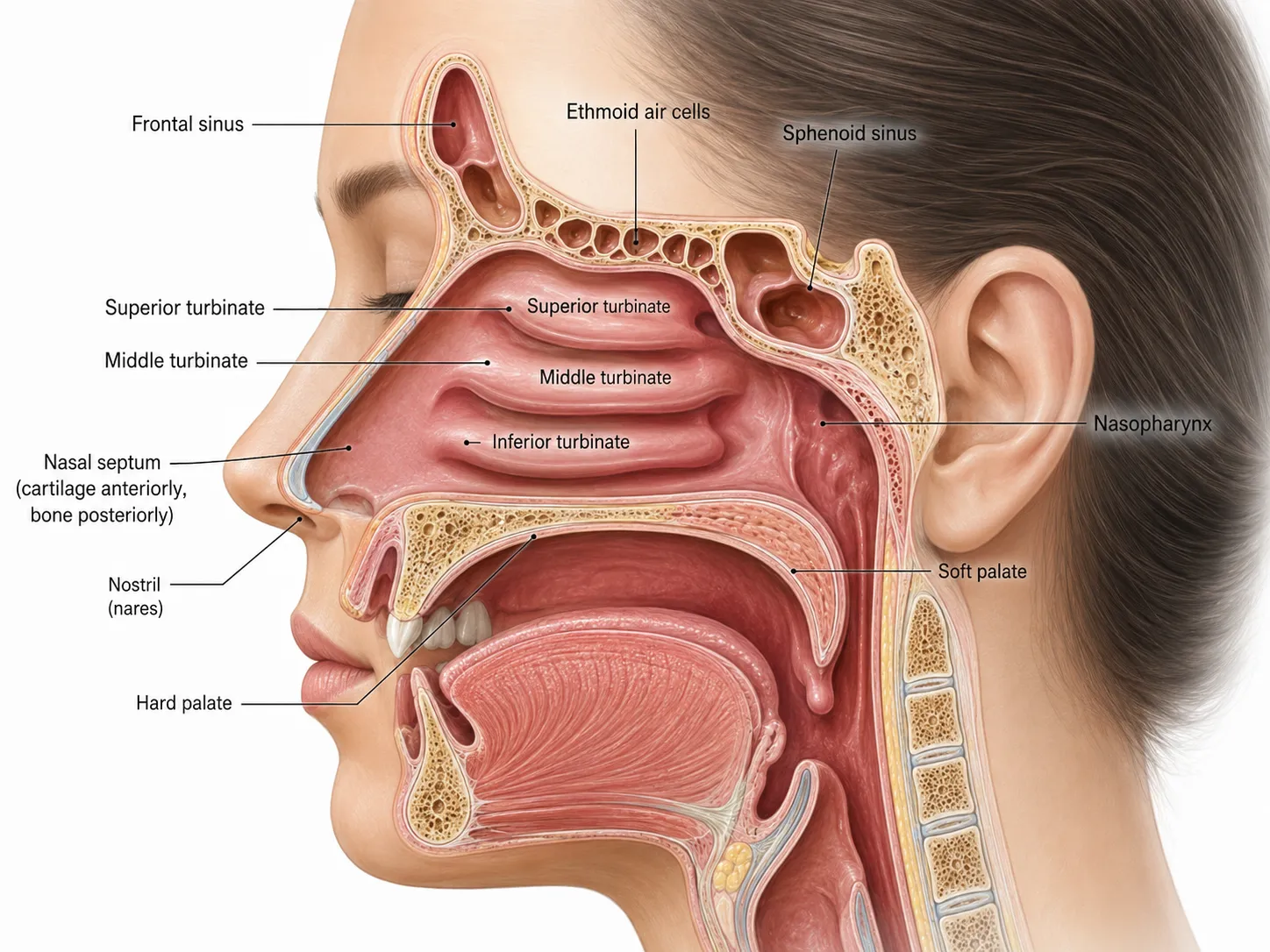
Your skull is not separate from the rest of your body. The position of the cranial bones, jaw, neck, and upper spine all influence how your body breathes, balances, and holds itself against gravity. Endonasal Cranial Correction is a precise technique used to address cranial restrictions from inside the nasal passages.
At Standwell, it is offered alongside the rest of the protocol for more direct access of skull structures that play a key role in breathing function, sinus drainage, and facial symmetry.
At Standwell, it is offered alongside the rest of the protocol for more direct access of skull structures that play a key role in breathing function, sinus drainage, and facial symmetry.
INDICATIONS FOR CARE:
CHRONIC NASAL CONGESTION
RESTRICTED NASAL AIRFLOW
SINUS PRESSURE
SINUS PAIN
SINUS HEADACHES
FACIAL PRESSURE
HISTORY OF FACIAL TRAUMA
VISIBLE FACIAL ASYMMETRY
DEVIATED SEPTUM
TMJ
RESTRICTED NASAL AIRFLOW
SINUS PRESSURE
SINUS PAIN
SINUS HEADACHES
FACIAL PRESSURE
HISTORY OF FACIAL TRAUMA
VISIBLE FACIAL ASYMMETRY
DEVIATED SEPTUM
TMJ
HOW IT WORKS:
Cranial adjustments are performed through the nasal passage using a small inflatable device, carefully inserted into a specific nasal passage and inflated for a short moment. This creates a controlled expansion inside the nasal and cranial system.
The goal is not to “force” the skull into a new position. The goal is to create a precise structural impulse that allows restricted areas to release, decompress, and reorganize.
The goal is not to “force” the skull into a new position. The goal is to create a precise structural impulse that allows restricted areas to release, decompress, and reorganize.
DOES IT HURT?
If you’ve tolerated a cotton swab test for COVID-19, you’re more than prepared. The balloon is inserted into the same places.
But unlike a dry cotton swab, the device is prepared with lubricating gel, which allows it to pass more smoothly with less irritation.
The sensation certainly feels strange, but the insertion itself is typically quick, controlled, and easier than most people expect. The inflation feels a lot like when your ears pop after a sharp elevation change.
The most annoying side effect (in our personal experience) is the drainage of the residual gel.
But unlike a dry cotton swab, the device is prepared with lubricating gel, which allows it to pass more smoothly with less irritation.
The sensation certainly feels strange, but the insertion itself is typically quick, controlled, and easier than most people expect. The inflation feels a lot like when your ears pop after a sharp elevation change.
The most annoying side effect (in our personal experience) is the drainage of the residual gel.
WHAT HAPPENS AFTERWARD?
Responses vary from person to person. Most notice immediate changes, while others experience more gradual shifts over the following days.
Commonly reported changes include:
Commonly reported changes include:
EASIER NASAL BREATHING
A FEELING OF MORE SPACE IN THE FACE OR HEAD
REDUCED FACIAL/SINUS PRESSURE
LESS JAW OR UPPER NECK TENSION
IMPROVED SENSE OF POSTURE/BALANCE
EYES OPEN FARTHER AND MORE EASILY
A FEELING OF MORE SPACE IN THE FACE OR HEAD
REDUCED FACIAL/SINUS PRESSURE
LESS JAW OR UPPER NECK TENSION
IMPROVED SENSE OF POSTURE/BALANCE
EYES OPEN FARTHER AND MORE EASILY
Drainage, fatigue, or pressure changes can also occur and are not typically bothersome. Because the cranial system is closely connected to the rest of the body, changes may not be limited to the nose or face. Some people notice shifts in posture, breathing, muscle tension, or general nervous system tone.
WHY WE COMBINE IT WITH POSTURAL CORRECTION
We first reduce the larger compensations in the body so the skull can be assessed accurately.
Once the structure is stable enough to reveal the cranial restriction, Endonasal Cranial Correction gives direct access to areas that standard body work cannot reach.
Once the structure is stable enough to reveal the cranial restriction, Endonasal Cranial Correction gives direct access to areas that standard body work cannot reach.
WHEN WE USE IT
Endonasal Cranial Correction is used when examination shows a cranial restriction that the procedure can access.
We screen for active infection, recent facial trauma, bleeding risk and other medical concerns before treatment.
We screen for active infection, recent facial trauma, bleeding risk and other medical concerns before treatment.
SCHEDULE AN ASSESSMENT
A Cranial Assessment & Treatment appointment includes history, examination and treatment.
BOOK APPOINTMENT →