


Built To Rally
Padel is a fast, rotational, and asymmetric sport. Performance depends not only on skill and conditioning, but also on how efficiently the body transfers force, absorbs load, and recovers between rallies.
At Standwell Chiropractic, focus rests on improving balance, coordination, and load distribution so that complex movement feels more effortless, powerful, controlled, and sustainable over time.
We support padel players at all levels, from recreational players to high-performance professionals.
Why Posture Matters in Padel
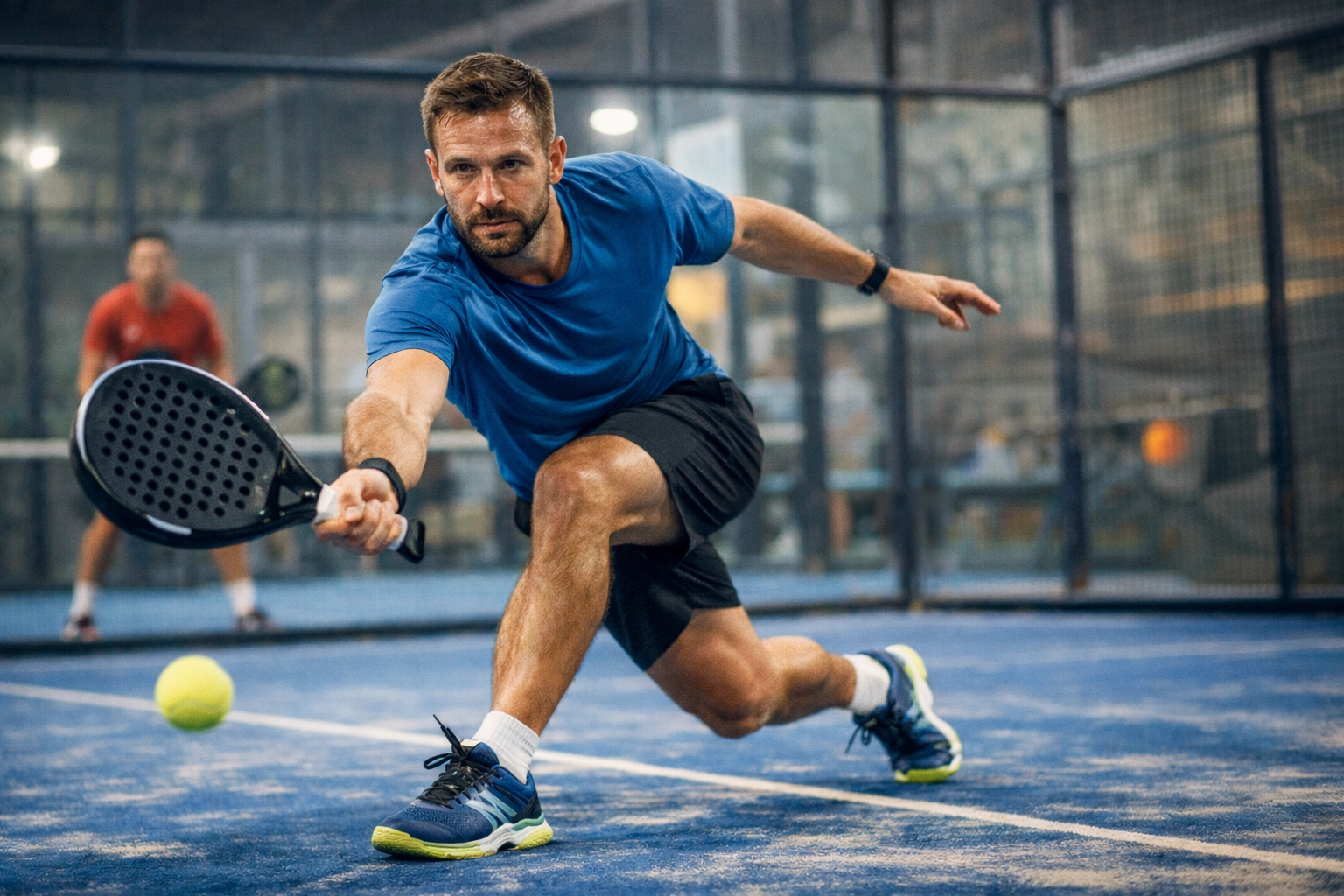
Padel places repeated demands on the body through rapid changes of direction, explosive rotational strokes, overhead shots, and sustained semi-flexed positions.
When posture is inefficient, these forces are absorbed unevenly. Over time, this can lead to reduced power transfer, slower reaction time, excess strain on shoulders, elbows, hips, or knees, and earlier fatigue during matches.
Standwell increases the proportion of the body’s support that comes from the skeleton. This allows more muscle to generate force rather than stabilize imbalances. With adequate treatment, athletes can expect consistent improvements in the following areas:
1) Proprioceptive Awareness
For padel players, the accumulation of compensatory muscle stiffness (shoulders, hips, neck, lower back) can significantly reduce proprioception on court. When certain muscles stay tense to “protect” or overwork during repeated shots, they limit the body’s ability to feel subtle changes in racket position, foot placement, and weight transfer. This makes touch shots long/less accurate, volleys less reactive, and quick directional changes harder to control. Instead of fluid, adaptive movement, players may feel stiff or late to the ball.
Improving mobility and reducing unnecessary muscle tension helps restore proprioceptive feedback, allowing padel players to move more efficiently, react faster, and play with better precision and confidence.
2) Rotation, Power, and Force Transfer
Swing power does not come from the arm alone. It depends on coordinated rotation through the feet, hips, spine, and shoulders.
Structural imbalances can limit trunk rotation, reduce power output, and disrupt timing during strokes.
Improved postural organization often supports more efficient rotational mechanics, better connection between lower and upper body, and increased stability during powerful shots. Many players report that strokes feel more fluid and require less effort.
3) Shoulder and Arm Load Management
Padel involves frequent overhead and high-velocity strokes. If the torso and pelvis do not provide adequate support, the shoulder and arm often absorb excessive load.
Common issues include shoulder fatigue or irritation, elbow or forearm strain, and reduced control during smashes.
By improving overall alignment and support, postural work helps distribute forces more evenly throughout the body, reducing unnecessary strain on the upper extremities.
4) Hip, Knee, and Lower-Body Support
Quick, lateral movement is central to padel. Stable, relaxed mechanics support faster changes of direction, better balance near the glass, and reduced stress on knees and hips.
Postural imbalance can lead to uneven weight distribution, overloading one side of the body, and reduced efficiency in push-off and deceleration.
Optimized mechanics help the lower body respond more quickly and with less effort, particularly during long rallies.
5) Endurance and Recovery During Matches
Padel matches often involve long rallies, repeated explosive efforts, and minimal rest between points.
When posture disproportionally relies on muscular effort rather than skeletal support, fatigue accumulates quickly. Optimized mechanics improve economy of movement, leading to better energy conservation, more consistent movement quality late in matches, and faster recovery between games or sessions.
6) Injury Prevention Through Structural Balance
Many pain complaints develop gradually, as with shoulder or elbow overuse and hip or knee strain. Others happen suddenly (commonly in the lower back or sacroiliac joints.)
Standwell takes a preventative approach by addressing asymmetries and load patterns before they become limiting. This can be particularly valuable for players increasing training volume, competitive league players, athletes returning from injury, and players combining padel with an otherwise active lifestyle.
When the body is better organized, movement feels more stable, responsive, and reliable, especially under pressure.
Who We Help
Our care is suitable for recreational padel players, competitive league players, tournament-level athletes, coaches, instructors, and athletes who use padel as part of cross-training. No prior experience with posture or movement work is required.
Are you curious about taking your performance to the next level? Click below to schedule an appointment.